The True Cost of Employee Retention
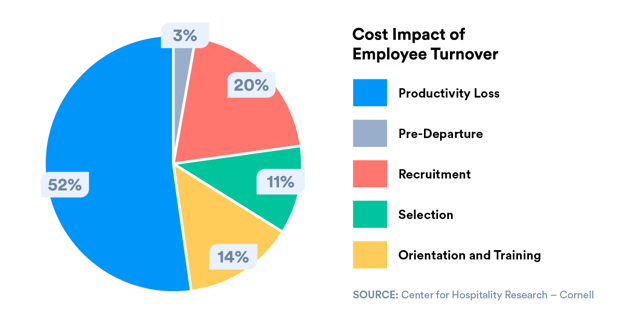
Employee turnover carries a substantial financial cost. Replacing an employee can cost between 50% and 200% of that person’s annual salary, while low engagement costs the global economy trillions of dollars in lost productivity.
The following research highlights both the cost of turnover and the workplace practices that improve retention, engagement, and employee satisfaction.
1. Gallup: Engagement, Performance, and Retention
· Business impact: Gallup’s large-scale meta-analysis links disengagement with higher turnover. Highly engaged teams report 21% greater profitability and up to 59% lower turnover in high-turnover organizations; in low-turnover organizations, turnover is 40% lower.
· Retention response: A culture built on regular feedback, clear expectations, and meaningful recognition can reduce employees’ desire to leave, preserve institutional knowledge, and strengthen morale.
2. Businessolver: Empathy and Employee Loyalty
· Risk of disconnection: When leaders fail to connect with employees, satisfaction declines and employees become more likely to look elsewhere. Research cited by The Happiness Index identifies feeling valued and recognized as a leading driver of loyalty.
· Retention response: Businessolver reports that 92% of surveyed employees believe workplace empathy directly supports retention. Empathy and recognition help build the trust needed to keep employees satisfied and motivated.
3. Work Institute: Why Employees Leave
· Financial impact: The Work Institute tracks the causes of resignation over time. Its findings show that turnover creates significant costs through lost productivity, recruitment, onboarding, and the time required for new employees to reach full effectiveness.
· Retention response: Limited career growth, ineffective management, and inadequate development opportunities are leading causes of voluntary turnover. Clear career paths, continuous learning, and strong leadership address these issues directly.
Recommended Areas of Focus
1. Build a manager empathy and recognition program.
2. Create clear career growth pathways that address preventable turnover.
3. Implement pulse surveys to monitor engagement and identify emerging concerns.
Leading workplace research organizations, including Gallup, publish extensive data and trend analyses showing that employee disengagement and poor retention cost the global economy trillions of dollars.
The Cost of Low Retention and Disengagement
· Lost productivity: Employee disengagement costs the global economy an estimated $10 trillion annually.
· Replacement costs: Replacing a departing employee can cost between 50% and 200% of that person’s annual salary when recruitment, onboarding, and ramp-up time are considered.
· Voluntary turnover: U.S. companies spend nearly $900 billion each year replacing employees who leave voluntarily.
How Engagement Strengthens Retention and Satisfaction
· Lower turnover: Highly engaged organizations report turnover rates that are 21% to 59% lower than those of less-engaged counterparts.
· Stronger performance: Highly engaged teams achieve 23% higher profitability and 18% greater sales productivity.
· Greater employee commitment: More than 86% of employees identify workplace well-being and meaningful recognition as important factors in their decision to stay.
Potential Next Steps
1. Establish a practical framework for measuring employee Net Promoter Score (eNPS).
2. Develop a set of onboarding best practices designed to improve first-year retention.
