What Keeps Modern HR Leaders Up at Night: Fragile Systems, Disengaged Learners, and Operational Risk

It is 2:15 a.m. on a Tuesday. While the executive team sleeps, I am thinking about employee records, compliance audits, system integrations, and training completion rates.
As an experienced HR leader, I have seen the concerns keeping HR and People Operations professionals awake change dramatically. Once, the biggest worries were employment-law updates or sudden turnover. Today, the challenge is more complex: the tension between the technology we depend on and the people expected to use it.
Beyond the corporate language, human resources rests on two operational pillars:
1. Operational Infrastructure: Do our HR systems, payroll platforms, and data pipelines run reliably without creating compliance risks or underpaying employees?
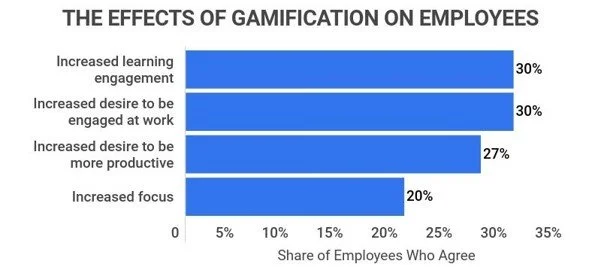
2. Capability and Engagement: Are employees learning, adapting, and working safely, or simply clicking through mandatory training to clear a notification?
When either pillar weakens, the organization suffers. When both fail, HR is left fighting a forest fire.
If you have wondered what keeps your People Operations team awake—and how modern human resource solutions can help—here is a candid look behind the HR curtain.
1. The Payroll and HR Systems Stack: Connectivity vs. Complexity
Start with the fundamentals. Payroll and core HR systems (HRIS/HCM) are the operational heartbeat of any business. If payroll fails on Friday, company culture will not matter by Monday.
Many mid-market and growing enterprises still rely on fragmented software: one platform for employee records, another for timekeeping, a vendor for benefits, and an external payroll provider. Whenever someone is promoted, relocates, or changes tax withholding, their data must move accurately across every system.
When integrations fail or fields do not align, the consequences can be severe: incorrect tax withholding, interrupted benefits, or inaccurate labour records.
What HR Professionals Use Today
Organizations typically choose leading HR technology according to their size and complexity:
· Enterprise leaders: SAP SuccessFactors, Workday, and Oracle HCM Cloud support large-scale, end-to-end workforce data processing.
· Mid-market leaders: ADP Workforce Now, UKG, and Dayforce combine robust payroll processing with talent-management capabilities.
· Small-to-midsize platforms: BambooHR, Rippling, and Gusto simplify core HR administration for growing teams.
Even the best software cannot solve weak strategy. Its value depends on the architecture, policies, and workflows behind it.
When internal teams are overwhelmed by data cleanup, delayed migrations, or misconfigured workflows, external HR consulting services can be essential. Experienced HR consulting firms can assess the technology stack, resolve data risks, and manage integrations without disrupting daily operations.
For fast-growing or resource-constrained companies, managing a complex technology stack in-house may not be practical. That is why HR outsourcing services have evolved from a cost-saving measure into a strategic option. Whether through full business-process outsourcing or a PEO model, delegating payroll, multi-state tax compliance, and benefits administration allows internal leaders to focus on culture and performance.
2. The Learning Management System (LMS) Paradox
If payroll and HRIS form the skeleton of People Operations, learning and development (L&D) supplies the muscle. An organization cannot scale if its workforce's skills remain static.
Yet traditional learning management systems often drain employee engagement.
For years, corporate L&D meant assigning a 60-minute desktop course once a year. Employees logged into a cumbersome portal, let the video play in the background, and clicked through a final quiz. The LMS recorded completion, compliance received a checkmark, and HR hoped the training had reduced risk.
That model is ineffective. Traditional LMS platforms track administration well, but often do little to change behaviour or improve retention.
Three Leading Enterprise LMS Platforms
Three platforms consistently stand out in modern enterprise learning:
· Docebo
Core strengths: AI-driven personalized learning paths and external-partner training extensions.
Ideal use case: Scaled enterprise training, customer and partner enablement, and global workforces.
· 360Learning
Core strengths: Peer-to-peer collaborative learning and decentralized course-creation tools.
Ideal use case: Rapid internal content creation by subject-matter experts.
· Cornerstone OnDemand
Core strengths: Deep talent-management integration and extensive enterprise scalability.
Ideal use case: Complex compliance, corporate upskilling, and skill-gap management.
Docebo, 360Learning, and Cornerstone OnDemand provide strong infrastructure for structured development, but even a robust LMS can feel remote to frontline, mobile, and operations-based employees.
A Key Example: The Power of SafetyCulture
For field technicians, manufacturing teams, retail staff, and construction crews or even Hotel Staff, a desktop-first LMS has limited value. Deskless employees are rarely stationed at computers waiting to complete modules on privacy or workplace safety.
Action-oriented platforms such as the SafetyCulture app, formerly iAuditor, address this gap.
SafetyCulture is more than an administrative tracker. It connects training with real-time frontline work through:
· Digital audits and checklists: Safety procedures appear on a mobile device at the moment work is performed.
· Action-linked micro-lessons: When a worker flags a hazard or failed equipment check, the platform can deliver a 60-second refresher on the phone immediately.
· Real-time incident reporting: Frontline employees can capture photos, document incidents, and complete corrective training within seconds.
Used alongside a central LMS, SafetyCulture turns training from a passive requirement into an active, real-time safety tool.
3. The Gamification Revolution and Mobile Microlearning
Why do traditional 45-minute slide presentations fail? Because the way people sustain attention has changed. People learn best from concise, relevant information delivered when they need it. Long, low-engagement annual presentations create cognitive overload, and much of the information is quickly forgotten.
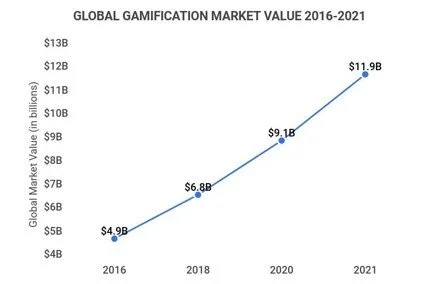
Modern L&D addresses this problem through two connected approaches: mobile microlearning and gamification.
Three Leading Gamified Training Platforms
Gamification is not about adding badges to dull content. It uses feedback, competition, and learning science to improve participation and retention. Leading platforms include:
1. Axonify: Designed for frontline teams, Axonify uses adaptive AI to deliver three- to five-minute daily learning activities. It tracks confidence and competence, then repeats concepts where knowledge gaps remain.
2. Kahoot! for Business: Supports live presentations, team workshops, and asynchronous challenges by turning compliance and product updates into interactive competitions.
3. TalentLMS: Offers midsize organizations built-in points, levels, leaderboards, and rewards within self-paced courses.
Why Short, Interactive Mobile Training Works
Replacing a 60-minute desktop course with a three-minute daily smartphone challenge changes the learning experience:
· Reduces operational disruption: Employees can train during natural downtime without leaving the floor, stopping a route, or scheduling an hour away from work.
· Uses spaced repetition: Revisiting core concepts through brief scenarios several times a week strengthens long-term retention.
· Builds engagement: Scores, leaderboards, and immediate feedback encourage regular participation.
· Provides timely insight: Frequent knowledge checks reveal skill gaps quickly, allowing HR to deliver targeted refreshers before problems escalate.
4. The Human Element: Closing the Expertise Gap
A company can deploy a leading payroll platform, a top-tier LMS, and gamified mobile training, but technology remains only an enabler. Systems do not create strategy; people do.
A major hidden risk is assuming that purchasing software automatically solves an HR problem.
· Software cannot repair a toxic management culture.
· An LMS cannot design an effective leadership curriculum on its own.
· A mobile app cannot offset unlawful discipline policies.
Overloaded HR teams often spend most of their time maintaining systems, processing payroll, and handling employee relations. That leaves little capacity to assess talent gaps or strengthen compliance.
For this reason, effective executive teams use external expertise for specialized, high-impact work.
1. Structural Policy and Legal Risk
Partner with an expert in HR compliance consulting to keep handbooks, wage-and-hour classifications, and safety practices aligned with the constantly evolving federal employment laws.
2. Recruiting Critical Leadership
Use specialized talent acquisition services to gain access to deeper candidate networks and advanced executive-search methods that internal HR teams may lack the capacity to maintain.
3. High-Impact Workforce Development
Engage an employee training consultant to build tailored leadership frameworks and mobile-first microlearning programs that fit operational workflows.
Whether you hire an HR consultant for an eight-week HRIS overhaul or retain an agency for ongoing advice, outside expertise can reduce burnout and keep people strategy aligned with growth.
This is especially valuable during expansion. HR outsourcing for small businesses gives teams of 30 or 100 employees access to enterprise-grade technology, legal guidance, and talent frameworks without the cost of building a full executive HR function immediately.
5. From Chaos to Control: An HR Action Plan
If you are a CEO, COO, or HR leader awake at 2 a.m. because of failing systems or ineffective training, take a breath. Moving from operational chaos to an integrated workforce strategy takes time, but it can be done systematically.
Use this four-phase framework to turn fragmented HR operations into reliable business drivers:
1. Phase 1: Audit & Cleanse
Conduct an HR compliance audit.
Clean HRIS data and repair payroll integrations.
2. Phase 2: Modernize the Stack
Align the core HRIS, such as ADP, Workday, or Rippling.
Deploy a modern LMS, such as Docebo or 360Learning.
Integrate frontline tools such as SafetyCulture.
3. Phase 3: Engage Through Micro-Training
Replace 60-minute modules with three-minute learning bursts.
Use mobile gamification platforms such as Axonify or Kahoot!.
Track confidence and competency in real time.
4. Phase 4: Optimize & Outsource
Engage specialized HR consultants.
Outsource transactional HR and talent acquisition where appropriate.
Keep the internal team focused on culture and strategy.
Phase 1: Audit & Cleanse
Before buying software or launching new training, assess the foundation. Review policies, handbook disclosures, wage-and-hour classifications, and HRIS data. Repair flawed data flows before adding more applications.
Phase 2: Modernize the Stack
Choose technology that fits the workforce. If many employees are deskless or field-based, avoid forcing them into desktop-first systems. Pair a central LMS such as Docebo or 360Learning with frontline tools such as SafetyCulture.
Phase 3: Drive Engagement Through Mobile Gamification
Replace long annual courses with three-minute interactive mobile challenges. Use competition, spaced repetition, and real-time knowledge checks to make training a useful daily habit rather than a compliance exercise.
Phase 4: Optimize Through Strategic Partnerships
Do not expect the internal HR team to master labour law, executive recruiting, and complex HRIS development at once. Use targeted HR consultant support, specialist recruiters, and strategic outsourcing for specialized work so internal leaders can focus on revenue, culture, and performance.
What Should—and Should Not—Keep Us Up at Night
HR professionals will always carry serious responsibilities. We care about our people, our culture, and the operational integrity of the organizations we serve.
But preventable payroll failures, broken integrations, and forgettable training should not cost us sleep.
By combining mobile-first technology, reliable infrastructure, and targeted external support, we can build HR systems that protect the business and help every employee perform at their best.
When that happens, everyone sleeps better.
